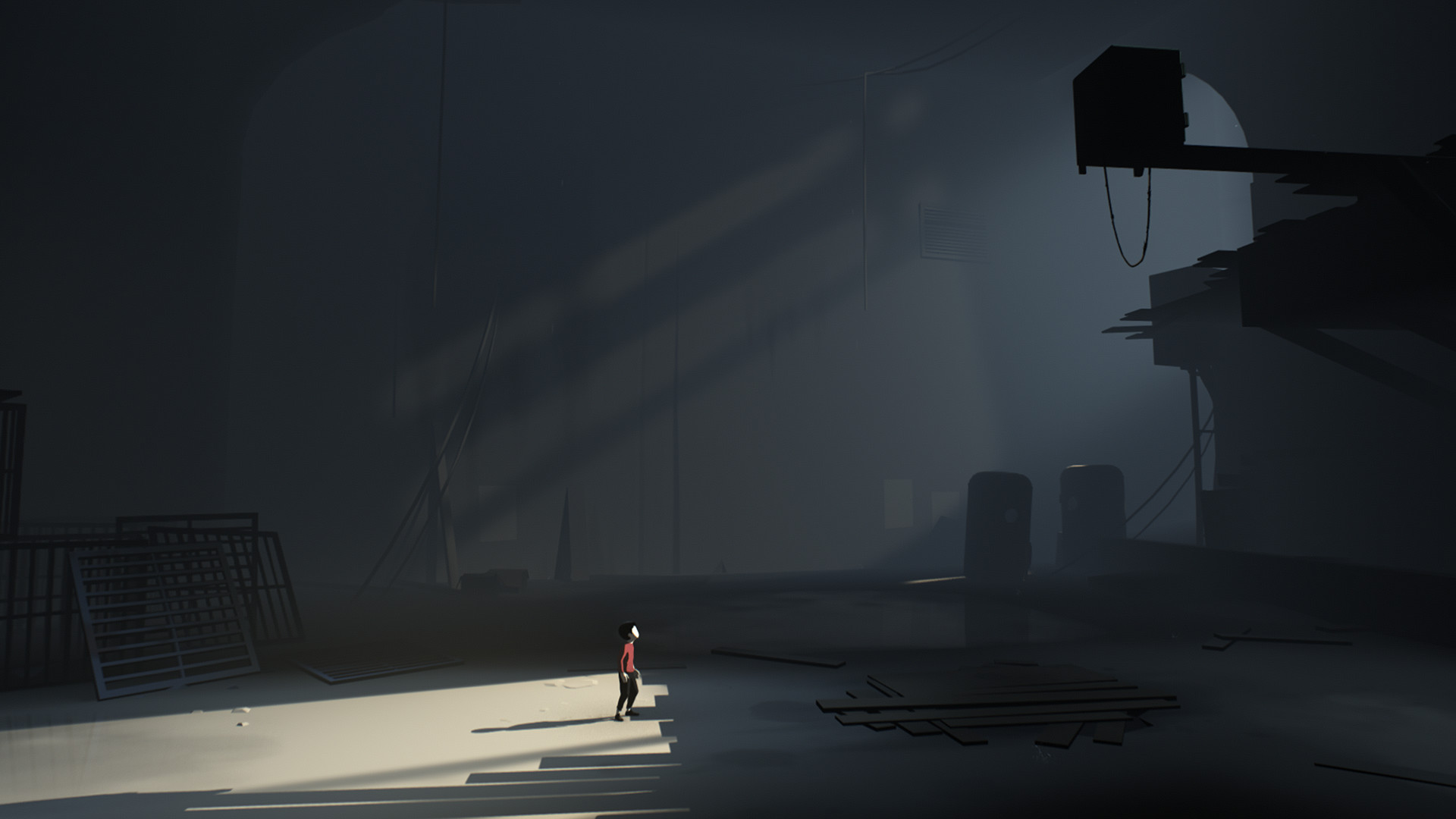
Inside ends, and then the credits roll, and then you sit there for a moment genuinely unsure of what you just experienced. Not in a bad way, necessarily — in the way you might sit after a film that ends on an image rather than a resolution, and feel the image settle into you while the meaning stays open. I found this satisfying, in the way that a question that doesn't demand an immediate answer can be satisfying. The friend I recommended it to rang me the next day, considerably less satisfied, wanting to know what it meant. I told him I wasn't sure, and he found this infuriating, and we spent forty-five minutes developing increasingly elaborate theories about parasites and capitalism and the blob, at the end of which neither of us knew any more than when we started but he seemed calmer for having tried.
The difference between his response and mine was not that one of us was right. It was that we had different tolerances for unresolved meaning. I was content to carry the question. He needed an answer, or at least the attempt at one. And while this might sound like a trivial difference in aesthetic preference, Arie Kruglanski's research on the need for cognitive closure suggests it runs considerably deeper — into personality, cognition, decision-making, and the way we handle uncertainty across every domain of our lives.
Inside, along with its predecessor Limbo, is the kind of game that reads as a Rorschach test for this trait. What you need from its ending tells you something real about how you approach ambiguity everywhere else.
The Game
Inside was developed by Playdead — the Danish studio also responsible for Limbo — and released in 2016. You play as a small boy in a grey, industrialised dystopia, running left to right through environments of escalating strangeness. There is no dialogue, no text, no narration. The world communicates entirely through image and action: the things you see, the puzzles you solve, the implications of what those puzzles require you to do. The game is visually extraordinary — the monochromatic palette, the lighting, the tiny figure moving through vast, indifferent spaces — and takes about three to four hours to complete.
The ending is the kind of thing that gets discussed in essays, dissected on Reddit, and interpreted in ways that contradict each other so fundamentally that the divergence itself seems like part of the point. Playdead have never explained it. The creators gave one long interview about the game and declined to specify what it meant, which is either an act of artistic integrity or an act of deliberate audience trolling, depending on your need for closure. The game also has a hidden ending, discovered by completing a series of optional secrets, which is even more ambiguous than the main one. This may also be deliberate. With Playdead, you can never entirely tell.
The Desire for Definite Answers — The Research
Arie Kruglanski developed the need-for-closure (NFC) construct across a series of papers in the 1980s and 1990s, formalising it in a 1994 scale that has since been widely used in personality and social psychology research. Need for closure describes the desire for a definite answer on any topic — any answer, as opposed to confusion and ambiguity. People high in NFC experience ambiguity as aversive and are motivated to seize on the first satisfactory answer and freeze on it, resisting subsequent information that might reopen the question. People low in NFC are more comfortable sustaining multiple possibilities simultaneously and show less urgency to resolve them.
The consequences of NFC in Kruglanski's research extend well beyond aesthetic preferences. High NFC individuals are more likely to make quick judgements about others and resist revising them, more likely to be persuaded by confident messengers rather than careful arguments, more likely to prefer simple explanations over complex ones, and more likely to experience anxiety in genuinely uncertain situations. In group settings, high NFC groups show stronger conformity pressures — the urgency to reach a shared answer promotes consensus and discourages dissent. Under conditions of stress, time pressure, or noise — all of which increase the cognitive burden of sustained ambiguity — NFC effects strengthen. We all become more closure-seeking when things are hard.
What this means, practically, is that the need for closure is not a fixed personality trait operating independently of context. It responds to load, to threat, to exhaustion. A person who tolerates ambiguity well under normal conditions may find their closure-seeking increasing significantly during a period of high stress or uncertainty. The pandemic years produced measurable increases in black-and-white thinking and decreased tolerance for complexity across populations — not because people's personalities changed, but because sustained uncertainty raised the need for cognitive resolution and the available cognitive resources for handling it dropped simultaneously.
What Inside Is Doing
Inside puts you in a situation with no instructions and no framework, and then delivers an ending that refuses interpretation. The game is, functionally, a test of whether you can tolerate that. Players high in NFC respond in predictable ways: immediate theorising, extensive forum research, consultation with other players, the construction of elaborate explanations that convert the ambiguity into something manageable. This is not stupidity or insecurity. It is the cognitive system doing what it does: seeking closure on an open question, driven by the discomfort of sustained uncertainty.
Players low in NFC often describe the game's ambiguity as a feature rather than a problem — as part of what makes it haunting rather than frustrating. They sit with the image. They let it stay open. They return to it occasionally and find it still resonates, precisely because it hasn't been resolved into a fixed meaning. This, too, is not a superior response — it's just a different cognitive orientation to the same material. The interesting thing is how strongly people feel that the other response is wrong.
Ambiguity in Real Life
The NFC research becomes most useful when applied to the genuinely ambiguous situations that real life provides in abundance: relationships that don't resolve cleanly into either good or bad, careers that don't obviously lead anywhere, periods of transition where the outcome is not yet determined. High NFC in these contexts produces premature closure — the relationship is declared over before the conversation has happened, the career pivot is made before the uncertainty has been tolerated long enough to gather the necessary information. The urgency to resolve the ambiguity drives decisions that the situation itself doesn't yet require.
The research by Donna Webster and Arie Kruglanski, who developed the original NFC scale together, found that people can modulate their closure-seeking through awareness of the tendency and through deliberate practices that increase comfort with uncertainty: the cognitive strategy of generating multiple interpretations of an ambiguous situation before committing to any one, or the emotional strategy of recognising that the discomfort of not knowing is temporary and survivable. The discomfort is real. It doesn't have to determine the decision.
When a story — game, film, book — ends without explanation, how do you feel?
What To Do With This
The most useful takeaway from the NFC research is not that you should stop wanting answers — wanting answers is how knowledge gets made — but that you should be aware of when the urgency to answer is being driven by the discomfort of the open question rather than the readiness of the situation to be closed. If you find yourself in a difficult conversation, a difficult decision, or a difficult transition, and you notice a strong pull towards any resolution over continued uncertainty, it's worth asking whether the resolution is genuinely available or whether you're closing the question early because the openness is uncomfortable. The discomfort is information. It doesn't always mean the question is ready to be answered.
Inside is a low-stakes practice environment for this. You cannot solve it. You can theorise about it. You can sit with it. You can notice which of those responses feels more like you, and then ask yourself whether that response travels with you when the stakes are higher. It probably does. That's the thing about cognitive orientations — they tend not to check what you're applying them to before they operate.
The takeaway: Arie Kruglanski's need-for-closure theory describes the individual desire for definite answers over ambiguity — a trait that varies across people, strengthens under stress, and influences decision-making, social judgement, and persuasibility. Inside is a game that offers no answers and invites you to notice how you respond to that. Your response to the ending tells you something about how you handle the genuinely unresolved situations in your actual life — which is to say, most of the important ones.
Play Limbo First, Then Inside
Both Limbo and Inside are short, inexpensive, and available on virtually everything. Play Limbo first — it's from the same studio, uses the same visual grammar, and serves as an extraordinary piece of preparation for the tonal register Inside is operating in. Then play Inside, and resist, as long as you can, the urge to immediately look up what it means. Sit with it. The theories will still be there tomorrow. The not-knowing is the part that's worth spending time with, and it's the part that goes away the moment you read someone else's explanation and let it replace your own open question with their closed answer. Or don't resist. Immediately Google everything. Notice how that feels too. Either response is data.
No comments yet — be the first!