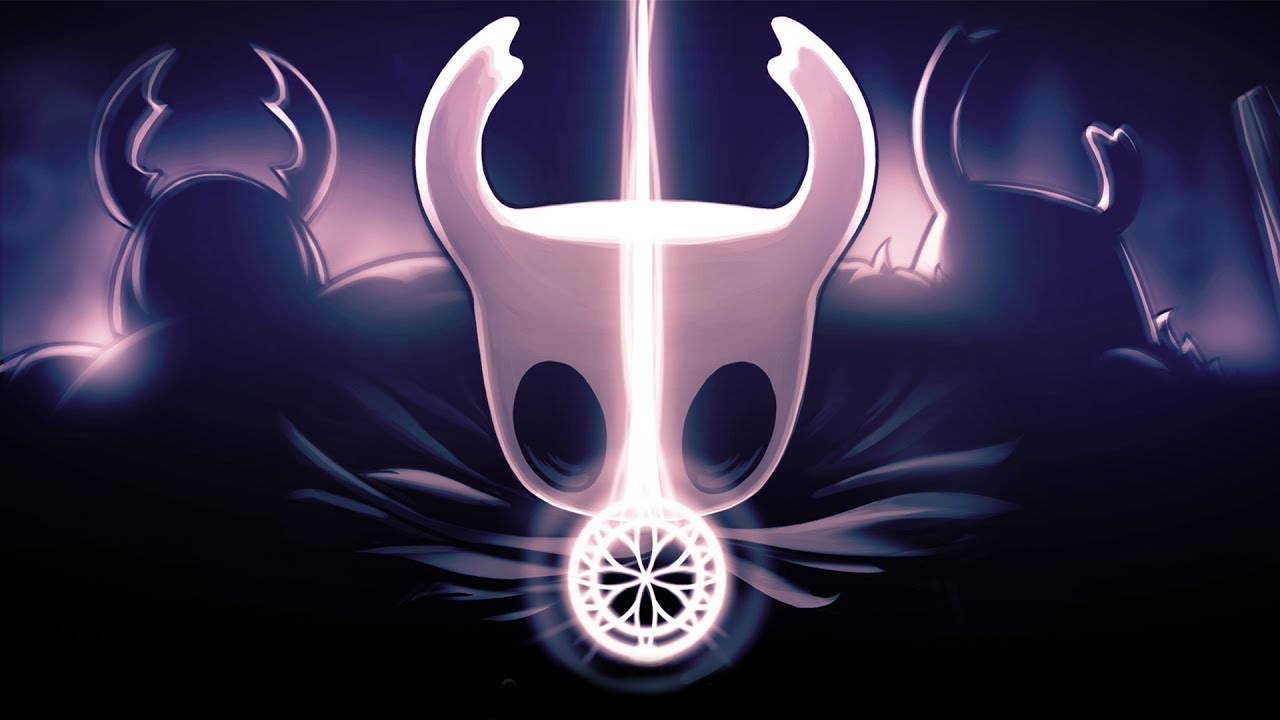
I reached Deepnest with about fifteen hours in Hollow Knight. Deepnest is the part of the game that is dark, labyrinthine, full of fast enemies that move in ways the previous areas had not prepared me for, and largely lacking the ambient glowing fungi that lit the earlier zones. My Geo — the game's currency, the material representation of progress — was locked in a shade I'd failed to retrieve from a previous death. I had inadequate health. I had not yet found a bench to rest at.
The rational choice was to go back up. I had been playing for three hours that session. I was tired. The area was killing me repeatedly.
I spent another ninety minutes in Deepnest before I finally found a bench. Not because I had a good reason. Because I had come too far to stop.
The game had been counting on this.
The Game
Hollow Knight was developed by Team Cherry, a three-person studio in Adelaide, Australia, and released in 2017 after a Kickstarter campaign that asked for thirty-five thousand Australian dollars and raised nearly six times that. It won enough critical praise to be considered one of the best metroidvanias ever made. It is approximately forty hours long for a completion playthrough, and significantly longer if you pursue optional content.
You play as the Knight, a small masked figure of indeterminate origin who descends into Hallownest — a vast underground kingdom populated entirely by insects that has been overtaken by a spreading infection called the Radiance. The kingdom is full of the remains of previous inhabitants: shells, dreams, wanderers who came down to find something and did not come back up. The game's lore is delivered obliquely, through environmental detail and brief ghost-fragments of memory, and one of the things it is consistently suggesting is that you are not the first person to have made the journey you are making, and that the others did not end especially well.
Mechanically, Hollow Knight layers in consequence through its geo system: when you die, you lose all your currency and must return to the spot where you fell to retrieve your shade. Failing to retrieve it loses everything. This creates the specific dynamic of Deepnest and a dozen other moments in the game: you keep going not because going deeper is wise, but because stopping means losing what you've already invested.
The Sunk Cost Fallacy — The Research
In rational economic theory, past costs are irrelevant to future decisions. The money you've spent is gone; the time you've invested won't return. The only variables that should inform whether to continue something are the expected future costs and expected future benefits. Continuing because you've already invested is, by the formal definition, irrational.
This has been known at least since the 1970s. It does not stop people from doing it constantly.
Daniel Kahneman and Amos Tversky's work on prospect theory, which won Kahneman the Nobel Prize in Economics in 2002, established the cognitive architecture that makes sunk cost thinking so persistent. Losses and gains are not experienced symmetrically: losing a hundred dollars feels approximately twice as bad as gaining a hundred dollars feels good. This asymmetry — loss aversion — means that ceasing an investment feels like accepting a loss, and the pain of that accepted loss is experienced as worse than the cost of continuing.
Continuing, in other words, isn't just irrationally optimistic. It is a way of not feeling the pain of loss right now. The investment of continued time and effort functions as a buffer against having to acknowledge that the earlier investment was a mistake. You are not irrational. You are, in a very human way, avoiding the specific pain of accepting a prior error.
Barry Staw's 1976 paper on escalation of commitment formalised this in organisational contexts: managers shown to have made an initial investment decision were more likely to recommend doubling down on a failing project than managers who had not made the original decision. The prior commitment changed what they saw. The same project looked more promising to the person who had publicly backed it. The sunk cost was not just a logical error; it was an identity defence.
Hallownest Is a Graveyard of Sunk Costs
The genius of Hollow Knight's lore is that the Knight is not the first one. They are, structurally and thematically, a repetition.
The Pale King — Hallownest's previous ruler — created a vessel to contain the Radiance and sacrificed an entire generation of born-hollow knights to find one perfect enough to seal it. When one was found, he descended it into the Abyss and sealed it in the Black Egg. He invested everything. It mostly worked. And then it started failing, slowly, and the choice he faced was the one Hallownest's geography keeps presenting: go deeper, try harder, put in more, because surely the investment is not for nothing.
The Radiance itself is a god made of the hunger to be remembered — a being constituted entirely by the unwillingness to accept that something is over. The infection it spreads is the compulsion to keep pursuing a goal beyond the point of reason. The entire kingdom has died of a version of the sunk cost fallacy, experienced at civilisational scale: we have given so much to this project that abandoning it is unthinkable, so we will give everything, including the ability to stop.
Your Knight descends into this. The game does not tell you it is replaying the same error until quite late. But you feel it — in the geo system, in the optional boss fights that offer no reward except completion, in the specific emotional texture of finding another dead wanderer in the deep dark who came looking for something and found they couldn't turn around.
Optional Bosses and the Reward of Having Tried
Hollow Knight's optional content is punishing in a specific way. The Pantheons of Silksong, the Trial of the Fool, the optional bosses that await only players who have already found everything else — none of these gatekeep content you need. They exist purely as tests of whether you will keep going. And a remarkable number of players do.
What they offer is not gear or lore or progression. It is the psychological reward of completion — the sense, when you finally defeat the final form of Nightmare King Grimm after thirty attempts, of having converted a sunk cost into a justified one. You went that far. You paid that price. And it was worth it, or it was not, but at least it is done.
This is not irrational in the narrow sense that it brings genuine satisfaction. But it is worth examining what that satisfaction is. It is the relief of not being the person who went far and turned back. It is the resolution of the anxiety that the investment was wasted. The game is not giving you a reward for the boss — it is giving you permission to stop feeling bad about how long you spent getting there.
What To Do With This
The standard advice on sunk cost thinking is to ask: if I were starting fresh, with no prior investment, would I choose to begin this? If yes, continue. If no, the only question is the expected future value — and past costs should not enter the calculation.
This is correct and genuinely hard to do, because the prior investment is not just financial or temporal — it is often reputational and emotional. Stopping means telling a story about yourself in which you quit. The identity cost of quitting sometimes exceeds the rational cost of continuing. Knowing this is only partial help; it is easier to see the trap from outside than to exit it from inside.
What Hollow Knight adds to the standard analysis is a question about obsession specifically — the kind of engagement that goes beyond sunk cost into something that feels like it has become necessary. The Knight is not continuing reluctantly. The Knight is compelled. The descent is not a mistake being persisted with; it is an identity. Hallownest is who they are now. And there is a version of this in real projects, real relationships, real pursuits: the point at which continuing is no longer about the original investment but about who you have become in the process of investing.
Knowing when to leave is as hard as learning to stay. Both require knowing what you are there for in the first place. The game does not resolve this. It descends into darkness and lets you sit with it. The bench is down here somewhere. You'll find it eventually.
In your life right now, is there something you're continuing because you've invested too much to stop?
The takeaway: The sunk cost fallacy is not a failure of intelligence — it is loss aversion doing its job, just in the wrong direction. The question to ask is not "have I invested too much to stop?" It's "what is the actual expected value of continuing from here?" Hollow Knight is useful because it makes you feel the sunk cost in your hands, then shows you an entire kingdom that died of it.
Play It Without a Guide Until You're Genuinely Stuck
Hollow Knight is a game that rewards being lost. Not for long — being lost without progress for too long produces the specific frustration that drives sunk cost thinking — but the particular pleasure of finding a path forward in Hallownest's geography is calibrated precisely for the moment when you had almost given up.
It is also a beautiful game. The environments are hand-drawn with a quality that most games don't approach. The music is extraordinary. And the optional content — which you do not need to experience to see the main story — is some of the most demanding and most memorable in any metroidvania ever made. Whether you attempt any of it should be a choice made on expected future enjoyment, not on the investment already sunk. You will probably attempt it anyway. So will I.
No comments yet — be the first!