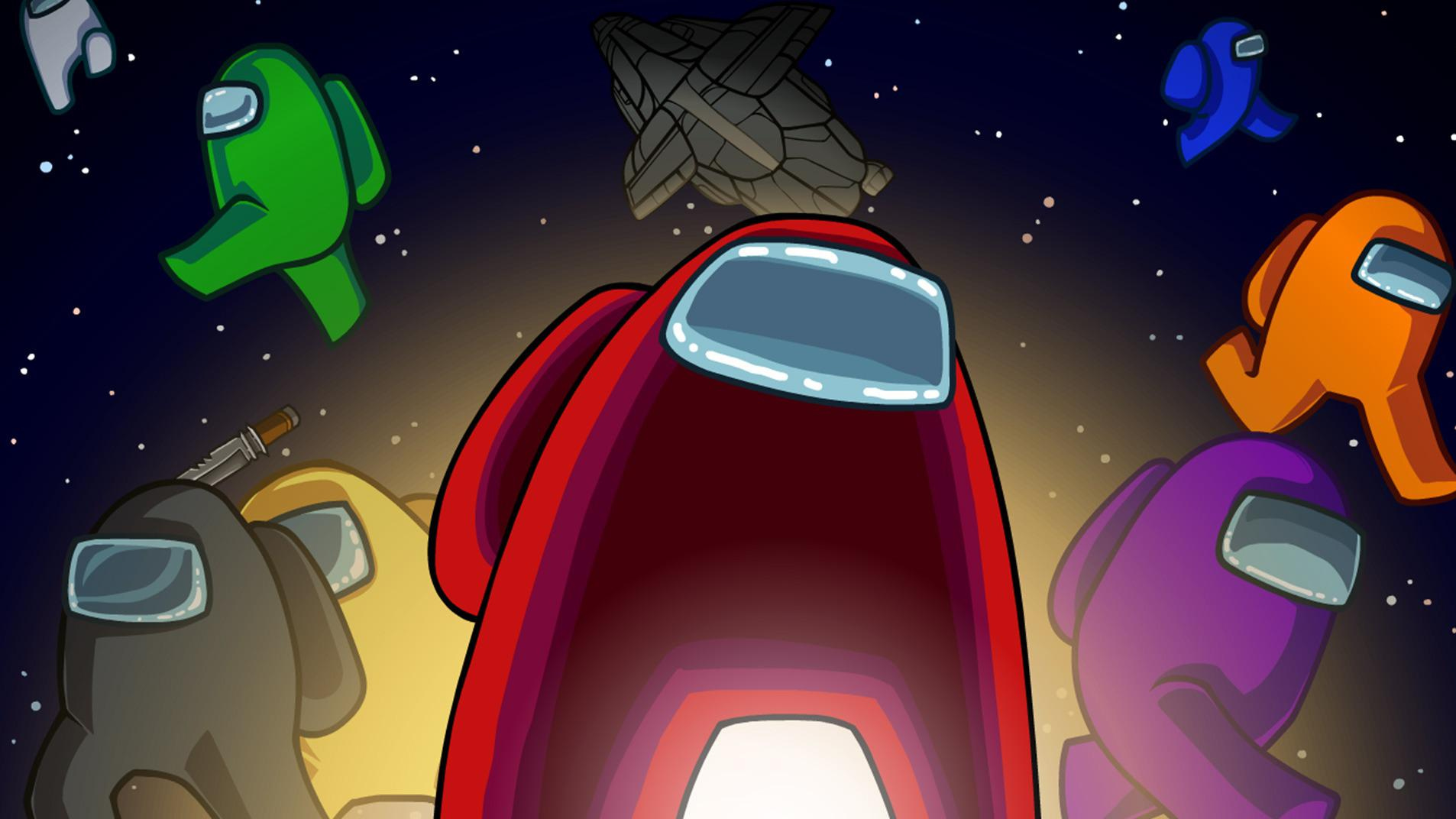
In the first Among Us match I remember really paying attention to, a player named Red was ejected into space after a frantic thirty-second meeting. Red had been standing near a body. Red had seemed suspicious. Three people voted to eject Red and everyone else followed, because when three people are confident about something, the social pressure to agree becomes almost irresistible.
Red was not the impostor. The actual impostor had simply been louder.
This is not a story about a bad outcome in a silly game. It is a story about how trust works under conditions of uncertainty — which is to say, under every condition that actually matters.
The Game
Among Us was developed by InnerSloth, released in 2018, and became a global phenomenon in 2020 when pandemic-era content creators discovered it and it briefly became one of the most watched games on streaming platforms. At its peak it had over 500 million monthly active players. Then it receded. The game did not change. The cultural moment did.
The rules are simple: a group of players are assigned roles as Crewmates or Impostors. Crewmates complete maintenance tasks around a spaceship. Impostors sabotage the ship and eliminate Crewmates. When a body is discovered, players gather to discuss who among them is the Impostor — then vote to eject someone. The team that runs out of players first loses.
What the description misses is the social texture. Discussions last about ninety seconds. Everyone can claim anything. Impostors lie; Crewmates can lie too, to protect themselves from false accusations. Nobody has complete information. Every decision is made under uncertainty, under time pressure, under the observation of people whose motives you cannot verify — most of whom, statistically, are on your side.
Trust — The Research
In formal game theory, trust is understood through the structure of games in which players must decide whether to cooperate or defect without being able to verify the other player's intentions in advance. The classic illustration is the Prisoner's Dilemma: two players each choose to cooperate or betray, and the payoff structure is designed so that betraying gives you a better individual outcome regardless of what the other person does — but if both players betray, both end up worse off than if both had cooperated.
Among Us is a Prisoner's Dilemma in social form, with a complication: you don't know who is playing what role. The Crewmate trying to decide whether to trust a teammate is doing so without knowing whether that teammate is also a Crewmate (in which case trust enables cooperation and increases the group's chance of winning) or an Impostor (in which case trust enables a killing).
Robert Axelrod's famous computer tournaments in the 1980s tested which strategies performed best in repeated Prisoner's Dilemma games. The consistent winner was Tit for Tat: start by cooperating, then do whatever the other player did last round. Simple, transparent, retaliatory without malice. The strategy that performed worst was unconditional defection — never trusting, always suspecting — because it destroyed the cooperative surplus that made the game worth winning.
Among Us accelerates this dynamic to pathological speed. You have ninety seconds. You have partial information. And you have the specific social pressure of a group meeting, which introduces a variable that formal game theory tends to abstract away: the influence of vocal, confident individuals on the decisions of others.
The Loudest Voice Problem
Social psychologists distinguish between informational social influence — changing your opinion because someone has provided evidence you hadn't considered — and normative social influence — changing your opinion because the social cost of maintaining a different view has become too high. Both are real. Both operate simultaneously in most group decisions. And in Among Us meetings, they are almost impossible to separate.
When three people say Red is suspicious, it does two things: it provides what feels like evidence (three independent observers reached the same conclusion), and it creates social pressure (dissenting from a clear majority carries a cost). The problem is that the three people may not be independent — they may have been influenced by each other, or by the first person to speak. The appearance of independent convergence is not actually evidence of convergent observation.
Solomon Asch demonstrated this in his famous conformity experiments in the 1950s: subjects asked to judge which of three lines matched a reference line would give clearly incorrect answers when surrounded by confederates who had unanimously given the wrong answer. Not because they couldn't see what was correct, but because the social cost of contradiction was high enough to override their own perception. About 75% of subjects conformed at least once across the trials. The unanimity of the group mattered more than its size; a single dissenter reduced conformity dramatically.
In Among Us, being the single dissenter who says "wait, we don't actually have evidence" costs you. You look suspicious. The game teaches, in almost every session, that defending someone the group has turned against is socially risky even when you have reason to believe the accusation is wrong. This is not a game mechanic. This is a remarkably accurate simulation of how institutions and communities behave under threat.
When Competition Eats Cooperation
The most psychologically interesting thing Among Us does is force players to hold two modes of relating simultaneously: they must cooperate with teammates to complete tasks, and they must compete with suspicion to identify threats. The game requires both at once, and they degrade each other continuously.
Early in the round, Crewmates typically cooperate well. Tasks are shared, players stay near each other for safety, communication is efficient. As bodies accumulate and meetings happen, the cooperative fabric frays. Players start monitoring each other rather than completing tasks. Accusations mount. People who made one ambiguous decision are treated as permanently suspicious. By the end of most rounds, the group has usually voted out at least one innocent player, often more — not because the Impostor is particularly clever, but because sustained suspicion is genuinely corrosive to the collective reasoning the group needs to identify them accurately.
The Impostor doesn't win by being smarter. They win by degrading the cooperative conditions that would allow the Crewmates to identify them. Sowing doubt is often more effective than avoiding detection. Creating a climate of mutual suspicion is the attack.
This is not a metaphor that should be stretched too far. But it is a pattern that recurs in enough real-world contexts — politics, institutions, relationships — to be worth recognising. The entity that benefits from your group's inability to trust each other is not always visibly adversarial. Sometimes it just keeps talking in the meeting until everyone votes wrong.
What To Do With This
The practical output of trust research is not "trust everyone" — that is the game-theoretic equivalent of going soft in a Prisoner's Dilemma. It is something closer to Axelrod's Tit for Tat: extend trust as a default, update based on evidence, do not let one data point permanently characterise someone, and distinguish between the social pressure to distrust and the actual evidence that distrust is warranted.
Among Us is useful because it isolates these dynamics in a consequence-free environment and makes them visible at speed. You will notice yourself voting on vibes. You will notice yourself conforming to a majority you're not sure is correct. You will notice the specific discomfort of being the person who says "we don't know" in a room that wants a name to eject.
These are real capacities, and watching yourself exercise or fail to exercise them in a ninety-second meeting is, in its small way, data. Trust is a choice you make before you have proof. The question is whether you're making that choice based on evidence you actually have, or on pressure you're pretending is evidence.
When you're in an Among Us meeting (or a real-life group decision), what do you tend to do?
The takeaway: The Impostor doesn't win by being clever — they win by making the Crewmates suspicious of each other. In games and outside them, watch for the dynamic where the attack is on the group's ability to cooperate rather than on any specific member. The loudest voice in the meeting is not always wrong. But it's worth asking why they're so confident.
Play It With People You Actually Know
Among Us is interesting with strangers but revealing with friends. The gaps between what you think you know about a person, what they actually do under pressure, and what the group collectively decides become visible in ways that are occasionally uncomfortable and frequently funny. You will discover who among your friends is willing to defend an unpopular position. You will also discover who caves immediately. Both are information.
The game is also, simply, delightful. The round goes wrong in five different ways simultaneously, someone's alibi collapses spectacularly, and you are all laughing too hard to vote properly. This is fine. The real lesson happens in the meeting, in the moment before the vote, when everyone is watching everyone else and someone says "I don't know, maybe skip" — and you have to decide how much that costs you to agree with.
No comments yet — be the first!