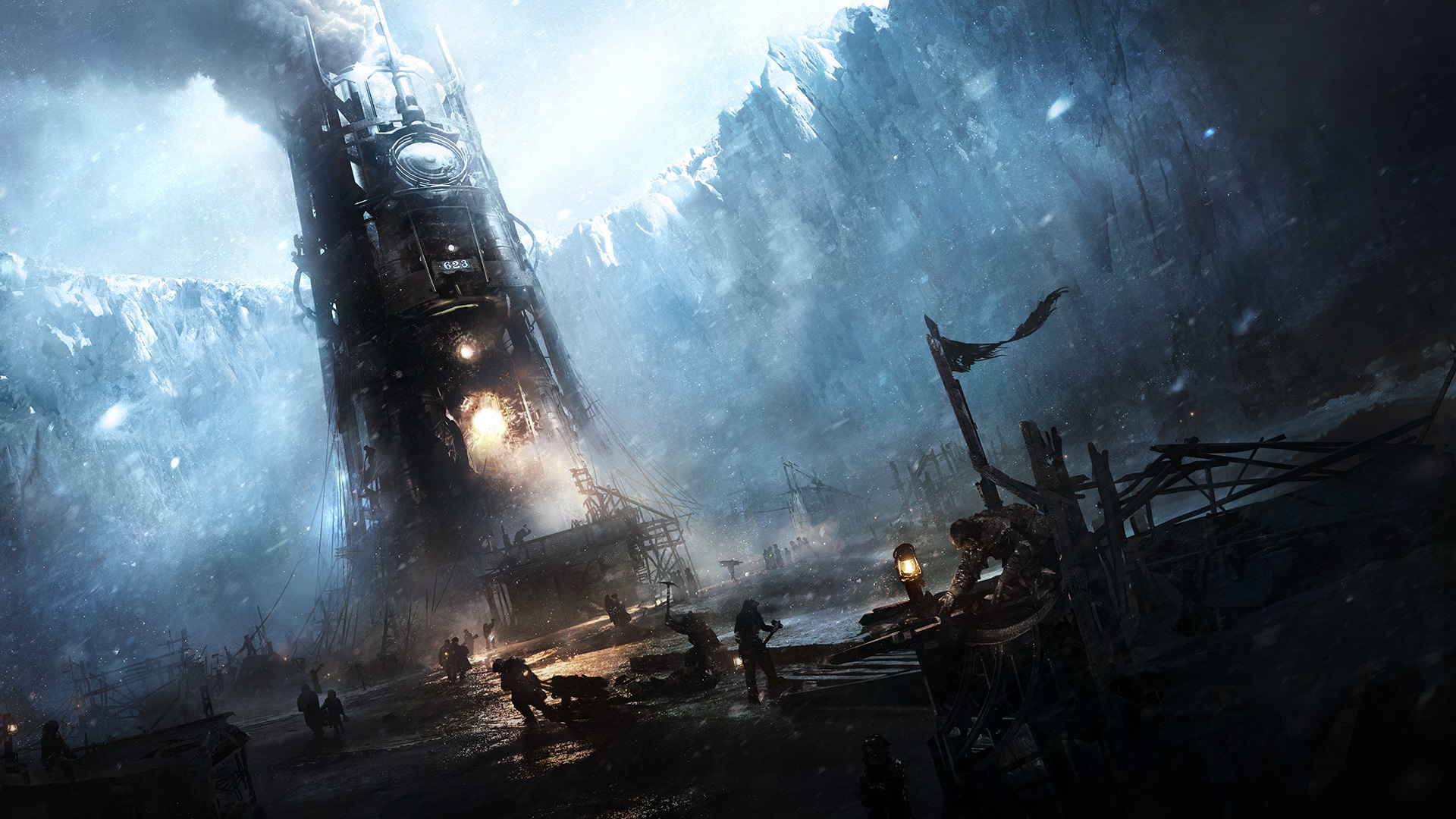
About three hours into Frostpunk, I passed a law that extended the working day. It was the right call — the coal reserves were dangerously low, the temperature was dropping, and the alternative was watching my city die. I told myself it was temporary. Another two hours later, I passed a law permitting child labour. I didn't want to. I spent a full minute staring at the confirmation screen. But the scouts hadn't come back yet, the food production was insufficient, and the children weren't doing anything dangerous, just sorting parts in workshops. It was fine, I told myself. It was necessary. I had kept this city alive through three blizzards and a disease outbreak. I was a good leader. Good leaders made hard choices.
By the end of that first playthrough I had signed off on a surveillance network, a propaganda programme, and a law that made it illegal to question my authority. The city survived. The ending screen told me what I had become. I sat with it for a while. The game had not forced any of these choices. Each one had been freely made, freely rationalised, and freely built upon the last. I hadn't set out to become an authoritarian. I had become one incrementally, one justified exception at a time, using the goodness of my earlier decisions as credit against my later ones.
Anna Merritt published the research explaining exactly this mechanism in 2010. She called it moral licensing. Reading it after Frostpunk is one of the more uncomfortable academic experiences I can recommend.
The Game
Frostpunk was developed by 11 bit studios and released in 2018. It is a city-builder set in an alternate Victorian apocalypse — a volcanic winter has covered the earth in ice, and the last remnants of civilisation are gathered around giant coal-powered generators, trying to survive. You are the leader. You manage resources, direct construction, run scouting expeditions, and, centrally, pass laws. The law mechanic is where the game's psychological work happens: two tech trees, Order and Faith, offering escalating options that provide benefits but shift the culture of your city in directions that compound over time. The laws start manageable — extended shifts, ration reductions — and escalate, if you choose, to things that are considerably harder to look at.
The temperature mechanic ensures that the pressure is relentless and graduated. It never becomes easy, and it never becomes impossible; it stays in the zone where every decision feels like the only available option, which is, the game clearly understands, exactly how moral compromise works in real life. Nobody signs up to become someone who does bad things. They sign up to get through the next crisis, and the next, and the next. The laws are just the record of the arithmetic.
The Credit You Spend Without Noticing — The Research
In 2010, Anna Merritt, Daniel Effron, and Benoît Monin published a paper in the Personality and Social Psychology Bulletin that examined a counterintuitive finding: that people who had recently done something morally positive were more likely, not less likely, to behave badly in subsequent situations. The mechanism they proposed was moral licensing: past good behaviour generates a sense of moral credit — a psychological surplus that the person then draws on, often unconsciously, to permit themselves behaviour they might otherwise resist. Having done something virtuous, you have temporarily established your identity as a good person, which paradoxically reduces the motivation to maintain that identity through continued virtuous behaviour.
The experimental evidence is striking. In one study, participants who had first recalled a moral act of their own were subsequently more likely to endorse discriminatory hiring practices. In another, participants who had purchased environmentally friendly products were subsequently more likely to cheat in an unrelated task. The licensing effect appears to operate below the level of conscious awareness — participants didn't describe themselves as thinking "I was good earlier so I can be bad now." They simply made different choices, as if the moral account had been quietly balanced.
Merritt and colleagues were careful to distinguish licensing from a related but different phenomenon: moral cleansing, where past immoral behaviour increases the motivation to behave well subsequently (the guilt-driven effect). The two effects run in opposite directions, and the determining factor seems to be whether the past behaviour threatens or affirms the person's moral self-image. Good behaviour affirms it, producing licensing. Bad behaviour threatens it, producing cleansing. This means that the person most at risk of moral licensing is not the person with a weak moral identity — it's the person with a strong one, because they have the most credit to spend.
The Creep
What Frostpunk demonstrates, with a clarity that makes it useful to discuss in any context involving ethics under pressure, is the way moral compromise operates through accretion rather than rupture. Most real-world ethical failures do not look like a person deciding to become corrupt. They look like a person making one small exception, then another, with each exception justified by the previous one and by the genuine pressures of the situation. The researcher who falsifies one data point to make a deadline and then finds it a little easier the second time. The manager who overlooks one piece of misconduct because the person involved is otherwise valuable and the timing is terrible. The politician who approves one irregular measure to get through a crisis and then finds the irregular has quietly become the normal.
Frostpunk's genius is that it makes this process visceral and personal. You are not watching someone else become an authoritarian. You are becoming one, in real time, in response to pressures you are managing. The game's refusal to judge your choices as you make them — it records them, it accumulates them, but it doesn't moralize — mirrors the way the licensing effect operates: quietly, without announcement, in the space between one good decision and the next.
In Frostpunk, which direction did your playthrough tend to go?
What To Do With This
The moral licensing research suggests a counterintuitive countermeasure: be more cautious after you've done something good, not less. The moment you've made a decision you feel proud of — the donation, the difficult honest conversation, the refusal to take the easy route — is the moment your moral credit is highest and your vigilance is most likely to relax. This doesn't mean undermining your own sense of moral identity; it means being aware that a strong moral self-image can, paradoxically, be the precise condition under which compromise is most likely to sneak in.
The other useful move is to watch for the incremental frame. "Just this once" is the sentence that preceded most moral licensing events in the research literature. Each exception is individually justifiable; the cumulative effect is what matters, and it's rarely visible from inside any single decision. In Frostpunk terms: the 10-hour workday is justifiable. The child labour is justifiable given what came before. The surveillance is justifiable given the crisis. And somewhere in the middle of that chain, you stopped being the kind of leader you thought you were, one small exception at a time. The game just has the decency to show you the ending screen.
The takeaway: Anna Merritt's moral licensing research found that past good behaviour increases the likelihood of subsequent moral failure, because it generates psychological credit that people unconsciously spend. Frostpunk is a real-time simulation of this process: you save lives in the early game, accumulate moral credit, and find yourself signing off on authoritarian measures in the late game — not through sudden corruption but through a chain of justified exceptions. The city survives. The person you were at the start doesn't quite.
Play It. Then Play It Again Without the Bad Laws.
Frostpunk is available on PC and console and takes around eight hours for a first playthrough. The sequel, Frostpunk 2, expands the scale considerably and is equally worth your time. Play the original first. Read the ending screen carefully. Then — and this is the actually instructive part — start a second playthrough and try to survive without the laws you used as a crutch the first time. Many players find the humanitarian run harder, not because the game is unfair, but because you have to make different choices earlier and live with different consequences. It is, in the strictest sense, more demanding. The game knows that. It always knew that.
No comments yet — be the first!