I was twenty-three when I moved back home. It was not supposed to be permanent — nothing is ever supposed to be permanent when you're twenty-three and explaining to your parents why you need the spare room back — and the plan was, broadly, to figure things out. What things, I couldn't have told you. Everything was a thing. My career was a thing. My friendships were a thing, most of them having rearranged themselves in ways I hadn't been consulted about. My sense of what I was supposed to want from my life was, I realised during the first week of sleeping in my teenage bedroom, quite comprehensively a thing. I spent a lot of that period convinced I was uniquely failing at some transition everyone else was navigating gracefully, and an embarrassingly large amount of time lying on the floor staring at the ceiling, which is an activity that is categorically less weird in your teenage bedroom than it is in an adult flat but still not something you want your parents to walk in on.
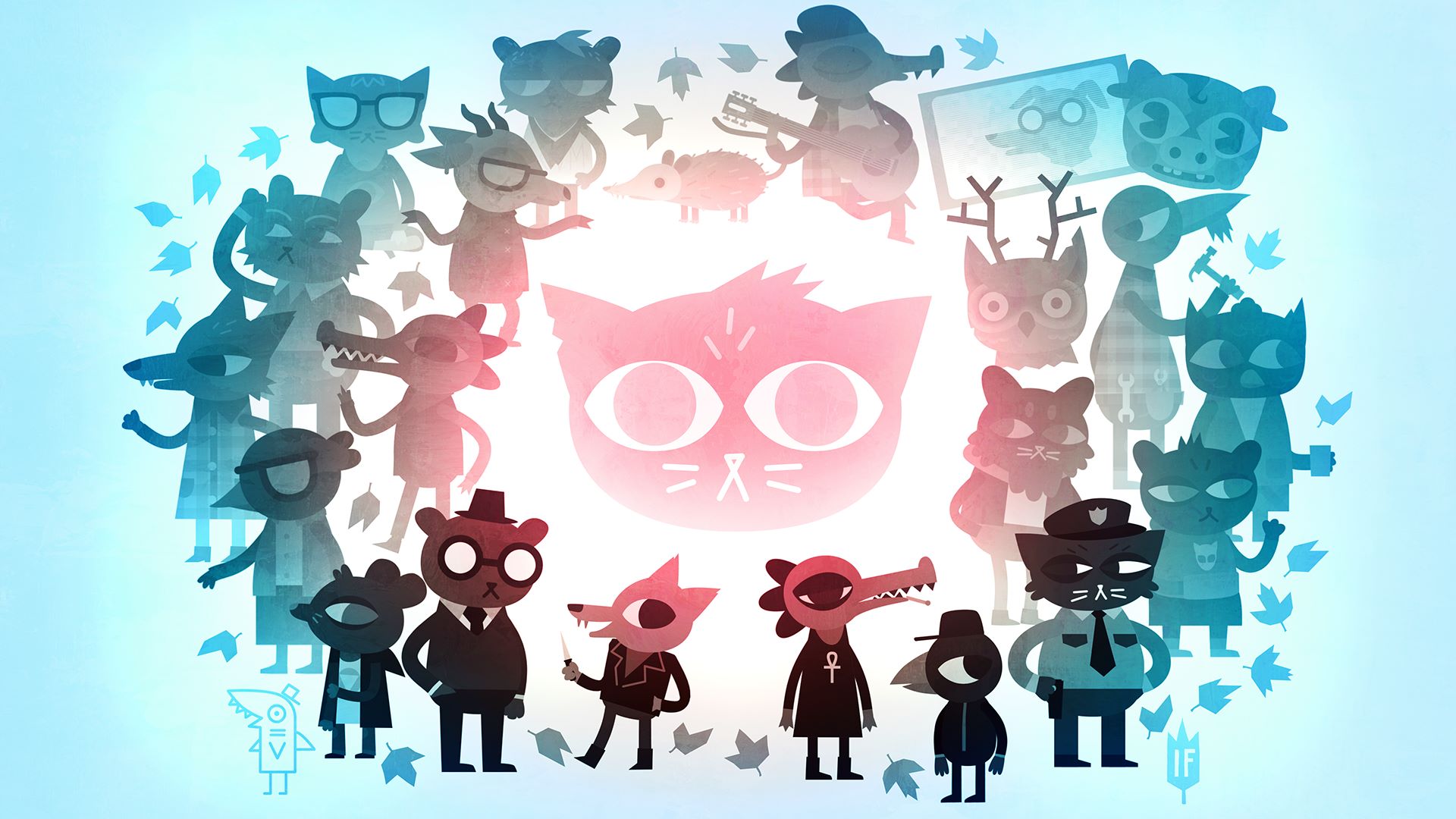
Night in the Woods understood this experience with a precision that I found, on first playthrough, slightly uncomfortable. Not because I needed to identify with a twenty-year-old anthropomorphic cat. Because the game knew exactly what it was like to come home to a place that used to make sense and find that you have, somehow, become the wrong shape for it.
Jeffrey Arnett coined the term "emerging adulthood" in 2000, and his research describes the experience so accurately that reading it feels retrospectively like being handed a field guide to a country you thought you were lost in but which turned out to have been thoroughly mapped all along. The disorientation, it turns out, is the terrain.
The Game
Night in the Woods was developed by Infinite Fall — primarily Scott Benson and Bethany Hockenberry — and released in 2017 after a successful Kickstarter campaign. You play as Mae Borowski, a twenty-year-old college dropout returning to the rust-belt town of Possum Springs, where she grew up. The town is declining economically, and the familiar is overlaid with a pervasive sense that things are winding down. Mae's childhood friends have jobs now, and worries, and a relationship to adulthood that feels opaque to her. Mae has trouble sleeping. She goes to parties and feels wrong at them. She walks along powerlines at night because the physical daring of it is easier to manage than the existential kind. And then, underneath all of this, there is a mystery — something strange and dark is happening in Possum Springs — and the game uses genre conventions to frame what would otherwise be a very quiet story about one person trying to figure out how to be alive in a world that stopped feeling legible.
The dialogue is the game's superpower. Mae's conversations with her friends — with Gregg, Bea, and Angus — are written with the kind of specificity that earns it: the particular cadence of people who have known each other since childhood, who love each other and are slightly growing apart and are aware of both things at once. The game is also, though it holds this lightly, about class — about what it means to grow up in a town where the options are leaving or staying, and about the guilt of each choice.
The Map Nobody Gave You — The Research
In a 2000 article in the American Psychologist, developmental psychologist Jeffrey Arnett proposed that the period between roughly eighteen and twenty-nine deserved recognition as a distinct developmental stage, separate from both adolescence and full adulthood. He called it emerging adulthood, and he characterised it through five features: identity exploration (figuring out who you are, particularly in love and work), instability (frequent changes in residence, relationship, education, career), self-focus (unprecedented freedom from obligation to others and opportunity to direct your own life), feeling in-between (neither adolescent nor fully adult), and a sense of possibilities (optimism about the future coexisting with uncertainty about the present).
The key insight in Arnett's model is that this stage is not pathological. It is not a sign that something has gone wrong. It is a developmental phase that emerged relatively recently in the history of industrialised societies, as the combination of longer education, delayed marriage, and economic conditions pushed the onset of settled adulthood later. For most of human history, the transition from childhood to adult roles was faster and less exploratory. The extended period of in-between-ness is new — and because it's new, there is less cultural scaffolding for it. You arrive in your twenties and the map that got you through childhood and adolescence stops working, and nobody thought to hand you a different one, because the territory itself is relatively recent.
The research on wellbeing during emerging adulthood is mixed in an interesting way. Arnett found that while emerging adults report high levels of feeling in-between and uncertain, they also report high levels of optimism and a sense that their best years are ahead. The distress, where it exists, tends to come not from the instability itself but from the expectation that instability is abnormal — from measuring yourself against an imaginary peer who has their life together in ways you don't, and finding yourself deficient. Which is exactly what Mae does, throughout the game, with quiet and painful consistency.
The Wrong Shape for the Room
What Night in the Woods captures about Arnett's in-between-ness is the spatial quality of it — the way everything that used to fit stops fitting, and the way you can't tell if the problem is you or the room. Mae's childhood bedroom is the wrong size now. Her friendships have a different texture. The town she grew up in is declining in ways that mirror her own sense of contraction, which is either a coincidence of setting or a piece of deliberate design that is doing a lot of quiet work. The game knows that the disorientation of emerging adulthood isn't just emotional — it's physical, environmental, relational. Everything is slightly off. The question is whether that means you have to change, or whether the world needs to make room.
The game's answer is tentative in a way that feels honest rather than evasive. Mae doesn't arrive at a plan. She arrives at a few things she can hold onto: the people she loves, a renewed willingness to be present, a tentative sense that the not-knowing doesn't have to be the same thing as failing. This is, for the record, exactly what the research on positive development during emerging adulthood looks like in practice. Not resolution. Not a career path and a mortgage. Just enough traction to keep moving without falling over.
When did you first feel like the map stopped working — like the rules of the road you'd been given no longer applied?
What To Do With This
The most useful thing Arnett's research offers is permission. Permission to find your twenties hard without concluding that you're broken. Permission to be in-between without treating it as a staging post you need to rush through. The cultural narrative around emerging adulthood — the breathless coverage of "millennials" and "Gen Z" either having it too easy or having it impossible — tends to frame the uncertainty as either a failure of character or a failure of circumstance. Arnett's framework suggests it is neither: it is a developmental phase with its own logic, its own tasks, and its own resolution timeline, which does not, it turns out, correspond to anyone else's.
The specific practical move the research supports is prioritising the things that provide traction during instability: close relationships, a sense of agency over at least some domains of your life, and the capacity to tolerate uncertainty without it collapsing into catastrophe. Mae does all three by the end of the game — not perfectly, not completely, but enough. The powerline-walking helps. The bandmates help. The willingness to keep getting up in the morning, even when the morning doesn't immediately offer any particular reason to, helps most of all.
The takeaway: Jeffrey Arnett's emerging adulthood research identifies the period from roughly eighteen to twenty-nine as a distinct developmental stage characterised by identity exploration, instability, and feeling in-between — not pathological, but genuinely difficult, partly because there is less cultural scaffolding for it than for earlier stages. Night in the Woods is the most accurate depiction of this experience in any game, and probably in most media. Mae is not failing. She is in a developmental phase that nobody prepared her for. Which, for what it's worth, includes most of us.
Play It If You're In It — or Were In It
Night in the Woods is available on PC, console, and mobile. It takes about eight to ten hours over several sittings, which is the right pace for it — it's designed to be lived with rather than completed. The soundtrack by Alec Holowka is beautiful and melancholy in equal measure, and will absolutely follow you around for days afterwards. If you're currently in your own version of the in-between — the returning home, the dropped plan, the identity that doesn't quite fit — play it. Not because it will resolve anything, but because it will make the terrain feel less like a personal failing and more like a place that other people have walked through too, and left notes about, in the form of a game about a small cat on a powerline at 2am.
No comments yet — be the first!