My grandfather kept my grandmother's reading glasses on the nightstand for two years after she died. Not as a shrine — he wasn't a theatrical man. He just kept putting them there every night when he went to bed, because that was where they went, and not putting them there would have required making a decision he wasn't ready to make.
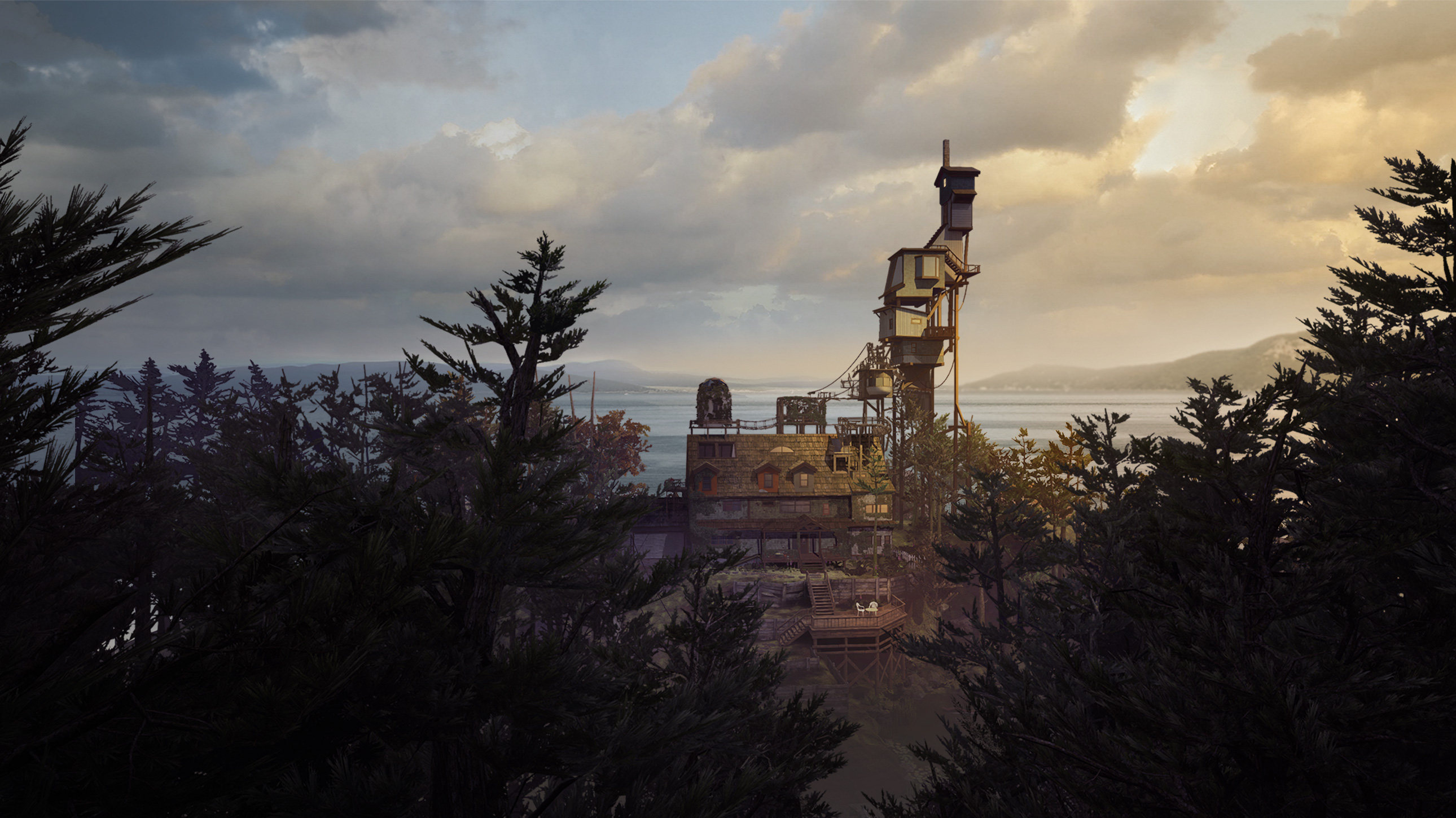
I thought about that a lot while playing What Remains of Edith Finch. The whole game is a house full of things that haven't been moved yet. Rooms sealed off. Objects exactly where they were left. A family that dealt with loss the way most of us actually deal with loss — not by processing it cleanly and moving forward, but by building around it, slowly, until the grief became part of the architecture.
It is a two-hour game. I have thought about it for considerably longer than that.
The Game
What Remains of Edith Finch was released in 2017 by Giant Sparrow, the studio behind The Unfinished Swan. You play as Edith Finch, returning to the family home on a forested island in the Pacific Northwest after the death of her mother. The Finch family has a history — every generation loses someone young, in strange and varied circumstances, and the house has been expanded and modified around each loss until it resembles less a home and more a monument to everyone who used to live there.
The game is a series of vignettes. You find each family member's sealed room, and you experience their final moments — each told in a completely different visual style, tone, and mechanical language. One is a comic book. One is a bathtub adventure. One is a swing. One — the one that stays with you longest — is a fish cannery, where the mundane rhythm of a job becomes something unbearable in the most quiet way imaginable.
There is no combat. No failure state. You cannot die. The game simply asks you to be present for each goodbye, and then to keep walking.
What Grief Research Actually Says
For most of the twentieth century, the dominant model of grief was stage-based. Kübler-Ross's five stages — denial, anger, bargaining, depression, acceptance — were developed from observations of terminally ill patients processing their own impending deaths, then applied, somewhat loosely, to bereavement. The model was intuitive and comforting in its tidiness. Grief, it suggested, had a shape. A direction. An endpoint called acceptance, beyond which lay recovery.
The research that followed was less tidy. Studies consistently failed to find people moving through stages in order, or at all. Grief, it turned out, did not progress. It surged and receded. It ambushed people years later in supermarkets and on Tuesday afternoons for no particular reason. It looked completely different from person to person, loss to loss, day to day.
William Worden's model — developed across decades of clinical work and published in his 1982 book Grief Counselling and Grief Therapy — reframed the process not as stages to pass through but as tasks to work on. Accepting the reality of the loss. Working through the pain. Adjusting to a world in which the person is absent. And finally, finding an enduring connection with the deceased while embarking on a new life. That last task is the important one. Worden's model doesn't ask you to let go. It asks you to transform the relationship into something you can carry.
This is, almost precisely, what the Finch house is. Every sealed room is a family member refusing task one — acceptance of the reality. But every story told within them is Edith working on task four. She is not letting go. She is learning how to hold.
Continuing Bonds — The Part Nobody Tells You
In 1996, Dennis Klass, Phyllis Silverman, and Steven Nickman published Continuing Bonds: New Understandings of Grief — a collection of research that challenged the prevailing assumption that healthy grieving meant detaching from the deceased and reinvesting emotionally in the living. Their finding, drawn from studies of bereaved parents, widows, and children who had lost parents, was that most people maintained ongoing inner relationships with the people they had lost. They talked to them. Consulted them. Kept objects. Told their stories. And this was not, as the older models suggested, a failure to grieve properly. It was how grieving actually worked.
The Finch family seals the rooms. They preserve the spaces. They tell the stories — to each other, across generations, until the stories become the family's primary way of staying together. This is continuing bonds in architecture. The grandmother who keeps building on top of the house rather than clearing it out isn't in denial. She is maintaining a relationship with everyone she has loved. The method is unusual. The impulse is entirely human.
What the game understands — and what I think most cultural representations of grief get wrong — is that the goal is not to stop feeling it. The goal is to keep living alongside it. Not beyond it. Alongside it. The two things occupy the same space.
The Cannery Sequence
I want to mention Lewis's story specifically, because I think it is the best thing in the game and one of the better things I have encountered in any medium.
Lewis works at a fish cannery. The mechanic splits your attention: your left hand operates the real task — heads off fish, conveyor belt, repetitive, relentless — while your right hand controls a fantasy world that grows increasingly vivid and elaborate as the real world fades. The text describes what is happening. The visual language shows you the dissociation in real time. You understand, without being told explicitly, exactly what this means and where it is going.
It is about escapism as a grief response. About the way the mind builds somewhere else to be when the real world becomes too heavy. About the seductive comfort of a story you control when the one you are actually living keeps taking things from you. I have never seen a game sequence that understood this particular experience as precisely. I found it difficult to play. I mean that as the highest possible compliment.
How do you tend to keep someone with you after they are gone?
The takeaway: Grief does not have stages, and it does not have an endpoint called acceptance beyond which everything is fine. It has tasks — ongoing, non-linear, never fully completed. The goal is not to stop feeling it. It is to keep living alongside it, and to find a way to carry the people you have lost into the life that continues.
What My Grandfather Eventually Did
He moved the glasses about three years after she died. Not to a drawer — to the bookshelf, next to the novels she used to read. Still present. Just differently placed. He didn't explain the decision. He probably didn't need to.
That is Worden's fourth task. That is continuing bonds. That is exactly what Edith Finch is about. Not moving on. Moving forward, with everything you are carrying, placed somewhere you can still see it.
Play this game. It takes two hours. Bring a quiet evening and somebody you trust, either in the room or at the end of a phone. You will probably want to talk to someone afterwards. That is the point.
No comments yet — be the first!